Community health nursing focuses on improving the well-being of an entire community by delivering direct patient care. Typically serving at-risk populations, a community health nurse provides preventive and primary care, including disease prevention and management, patient education, and health screenings. These nurses need a nursing degree, licensure, and clinical experience.

Most nurses focus on the health of individual patients, but community health nurses work to improve the well-being of entire communities. Community health nursing often focuses on the needs of underserved populations, such as those with limited access to care. If you’re interested in a nursing specialty that emphasizes prevention and empowers marginalized populations, you might consider stepping into the role of a community health nurse.
A nursing education from the University of St. Thomas (UST) prepares you to step into any nursing specialty, particularly serving the underserved. University of St. Thomas’ Accelerated Bachelor of Science in Nursing (ABSN) program enables you to graduate in as few as 12 months if you have a completed non-nursing bachelor’s degree or at least 60 non-nursing college credits. You’ll graduate ready to take the licensure exam and begin work serving your community as a registered nurse (RN).
While you’re working toward your nursing career, take some time to think about the practice area that aligns with your interests and strengths. Explore the responsibilities of community health nursing and why this specialty is important.
What Is Community Health Nursing?
Community health is a nursing practice area that strives to improve the quality of life for people in a community, such as by reducing disease burden and championing health improvement programs. Community health RNs work with individuals and families, helping them reduce their risk of chronic conditions or better manage the ones they already have.
Community health nurses focus on empowering underserved communities. For example, they may provide free health screenings to low-income families or work out of mobile clinics to reach unhoused populations in need of care.
Community Health Nursing vs. Public Health Nursing
Although the terms may sometimes be used interchangeably, community health nursing isn’t the same as public health nursing. A community health nurse strives to improve the community’s overall health by providing direct patient care to individuals and families within it. With a focus on preventive wellness, a community health RN provides patient education, preventive health screenings, and treatments.
In contrast, a public health nurse takes a higher-level approach to improving health by advocating for resources and funding, influencing policy reforms and other system-level changes, and tracking health outcomes in a population.

Where Do Community Health Nurses Work?
Community health nursing RNs work in a variety of settings. It’s common for them to work in non-hospital settings, such as community health clinics and home healthcare agencies. These RNs may also work in homeless shelters, shelters for domestic violence victims, and similar settings. Some may work for aid organizations, such as non-governmental organizations (NGOs).
The Role of a Community Health Nurse
Community health nursing is a wide-ranging practice area. A community health RN serves as a patient advocate, helping them access needed community resources. They are also educators who help patients learn how to take better care of themselves.
Primarily providing preventive and primary care, community health RNs aim to improve lives in their communities. In some cases, they may be called upon to respond to localized crises, such as natural disasters.
Responsibilities of Community Health Nursing
What is community health nursing like? A community health RN may handle a wide range of tasks on a daily basis, including the following:
- Care coordination
- Disease management and prevention
- Head-to-toe patient assessments
- Health screenings
- Immunization administration
- Patient education, including new parent education
- Wound care
Explore a day in the life of a nurse to learn what you can expect.
Key Skills for Nurses in Community Health
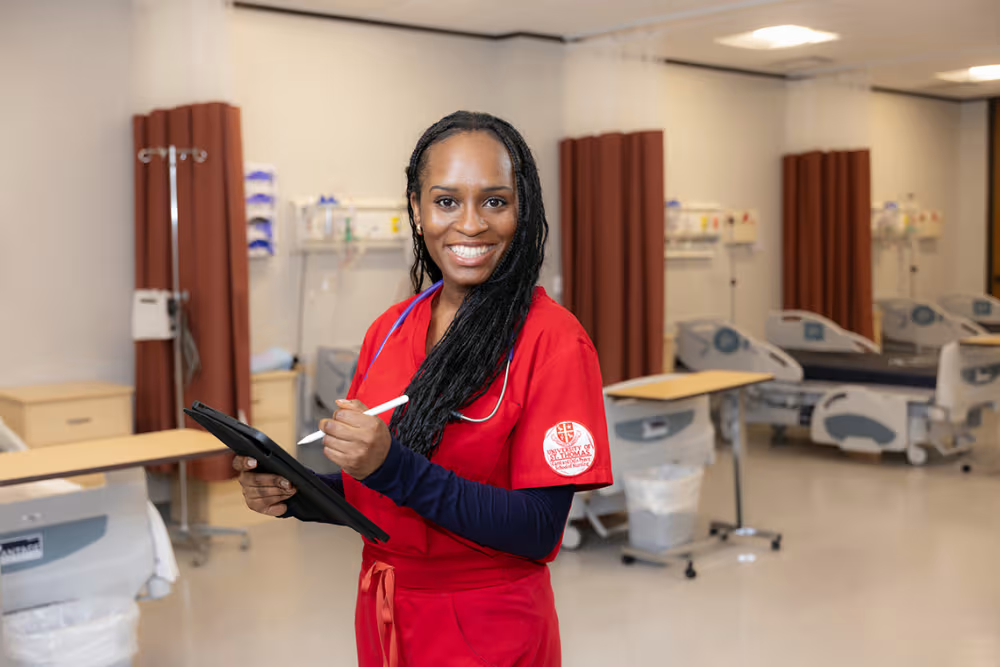
Community health nurses need both clinical and soft skills. Some of the most important clinical skills in this practice area include patient assessment, patient education, and infection control. Wound care, immunization administration, and disease management are other core competencies.
One of the most important soft skills for a community health nurse is interpersonal skills. These RNs must be able to build strong rapport with their patients in order to cultivate trust. Community health RNs need to respect people of all backgrounds and walks of life and be able to offer care in a nonjudgmental manner.
Other essential soft skills include:
- Adaptability
- Advocacy
- Autonomy
- Communication skills
- Compassion and empathy
- Cultural competence
Examples of Community Health Nursing Programs That Improve Outcomes
There are many examples of successful community health programs that have improved patient outcomes and quality of life for underserved communities. One such organization, Memorial Hermann Community Health in Houston, provides dozens of health services at reduced or free cost through its neighborhood health centers.
At Memorial Hermann’s community resource centers, community health workers can easily refer patients to needed resources, like food, housing, and transportation, to address social determinants of health.
Other impactful community health programs include:
- Beyond Violence: In California, this program connects victims of interpersonal violence to mental and physical health resources, such as a follow-up trauma clinic, as well as to resources such as food, housing, education, and jobs.
- TC Street Medicine: This program offers medical care and support services to the local unhoused population, both within community health clinics and at encampments. The program also connects at-risk individuals with housing assistance.
- UH Food for Life Markets®: This program involves screening patients for food insecurity and providing dietitian consultations and free, nutritious food.
Why Community Health Nursing Matters for Public Health
Providing care to underserved populations helps strengthen the entire community. Community health nursing can promote wellness and address health disparities in at-risk communities by working with individuals and families who might not otherwise have access to care.
A community health RN can help build community relationships, cultivating trust between marginalized populations and the larger community. These RNs can encourage patients to undergo necessary health screenings and make lifestyle adjustments that can lower their risk of illness and injury. They can also address social determinants of health by collaborating with community partners to connect those in need to food or housing assistance.

Learn how to get into nursing school in just six steps.
How to Become a Community Health Nurse
All RNs need a nursing degree. If you have a non-nursing bachelor’s degree or at least 60 college credits, you may be eligible to apply to UST’s ABSN program. The UST ABSN program is well-equipped to train nurses for a myriad of community nursing scenarios. After completing any needed prerequisites and enrolling in the program, you could earn a Bachelor of Science in Nursing (BSN) in as few as 12 months.
Then, you’ll need to pass the NCLEX-RN licensure exam to obtain your state-issued RN license. Once you’re an RN, you can apply to nursing jobs at the bedside to gain clinical experience. To gain experience working with a wide range of patients across the lifespan, consider a primary care role.
After gaining at least a year or two of clinical experience, start looking for community health nursing jobs. You could also pursue professional certifications, such as the Community Health Nursing Certification (RN-BC).
Career Outlook and Salary Expectations
The future looks bright for all types of nurses. The U.S. Bureau of Labor Statistics (BLS) doesn’t track employment data for specific nursing specialties, but all RNs can look forward to a 5% job growth rate from 2024 through 2034, which is faster than the average for all occupations and translates to about 166,100 added jobs over this period. Additionally, registered nurses made a median annual salary of $93,600 as of May 2024.

Earn Your Nursing Degree at UST
You can get started on your nursing degree sooner at UST, with no waitlist and three annual start dates to choose from. We can enroll more nursing students, thanks to our three locations in the Houston area. Our Catholic university welcomes students of all backgrounds who are interested in a values-based education that promotes ethical leadership and holistic nursing practice. Our nursing students receive support from attentive faculty and Academic Success Coaches.
Request info today and connect with admissions advisor to review your eligibility for the ABSN program.