
What is a pediatric nurse? A pediatric nurse cares for children from infancy through adolescence. Learning how to become a pediatric nurse starts with researching nursing school options. After earning a BSN, take the NCLEX-RN to obtain RN licensure and become a pediatric nurse.
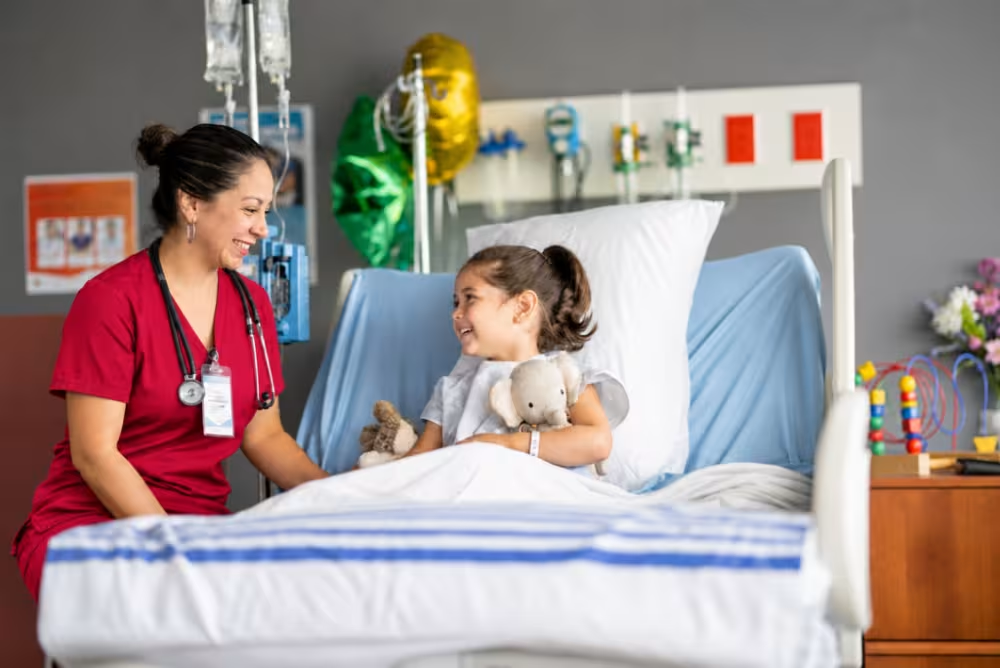
The process for how to become a pediatric nurse is similar to that of other types of registered nurses (RNs). First, you’ll earn a nursing degree, such as a Bachelor of Science in Nursing (BSN). Then, you’ll need to pass the NCLEX-RN to obtain a state-issued nursing license. After you’ve gained experience at the bedside in pediatric nursing, you might decide to add professional certifications to your resume.
If you’re interested in a nursing career and already have a completed non-nursing bachelor’s degree or at least 60 college credits, you could choose an accelerated program. The University of St. Thomas in Houston’s Accelerated Bachelor of Science in Nursing (ABSN) program offers a graduation timeline of as few as 12 months after completing prerequisites. You’ll receive a comprehensive nursing education that prepares you for a pediatric nursing career.
For many families, pediatric nurses are their primary point of contact with the healthcare system, providing guidance, advocacy, and empathy. Learn more about pediatric nursing and get the answers to common questions, such as "What does a pediatric nurse do?” and “How much does a pediatric nurse make?” Then explore the career path and decide whether it is right for you.
What Is Pediatric Nursing?
What is a pediatric nurse’s job like? Pediatric nursing focuses on caring for young patients from infancy through adolescence. A pediatric RN cares for patients at different developmental stages and with a range of health issues, including acute or chronic and congenital or acquired conditions. Depending on the clinical environment, the focus often includes preventive wellness and parental education.
Pediatric nurses work in various settings. Some work in emergency care, while others treat children in critical care or family health settings.
What Does a Pediatric Nurse Do?
A pediatric nurse’s specific job responsibilities will depend on the clinical setting. In general, however, some common tasks include:
- Administering medications, immunizations, and other treatments
- Assessing patients, including developmental milestones
- Handling diagnostics
- Providing family education and support
A key part of a pediatric RN's job is comforting their young patients. Children may feel scared in a clinical environment, and they may get upset when receiving immunizations. Pediatric nurses must maintain a cheerful disposition while supporting and encouraging patients.
Explore a day in the life of a nurse.
Pediatric Nurse Responsibilities in Different Care Settings
Pediatric nurses can work across different clinical settings, and their job responsibilities can vary accordingly. Emergency rooms, intensive care units, schools, community health clinics, home health agencies, family physicians’ offices, and other outpatient clinics are among the settings where pediatric RNs work.
What does a pediatric nurse do in different care settings? In a home health setting, a pediatric RN may primarily care for children with long-term health issues, including developmental disabilities. In emergency rooms and intensive care units, pediatric nurses handle triage and provide stabilizing care.
In community health clinics, family physician offices, and similar settings, pediatric RNs often focus on preventive wellness. They track developmental milestones, handle health screenings, provide vaccinations, and educate families. They may also treat acute health concerns, such as sudden illnesses, and manage chronic conditions.
Essential Skills for Success in Pediatric Nursing
In pediatric nursing, RNs need both clinical skills and soft skills. Some of the most important clinical skills in this nursing specialty include:
- Age-specific patient assessment skills
- Medical equipment operation
- Medication calculation for the appropriate age group
- Patient/parental education
- Respiratory support
- Vascular access for small veins
- Wound care
Pediatric nurses need in-depth knowledge of how children develop from birth through adolescence. They must be able to assess a child’s development in light of age-appropriate milestones. Pediatric RNs must also be able to use medical supplies sized for children, such as pediatric and neonatal blood pressure cuffs and resuscitation equipment.
Soft skills are also important in this nursing specialty. In particular, pediatric nurses can benefit from:
- Advocacy
- Calmness
- Communication skills
- Empathy and compassion
- Gentle presence
- Observation
- Patience
Pediatric RNs can reassure their young patients with a gentle presence and a playful approach. Distraction techniques can also help keep young patients calm during treatments.
How to Become a Pediatric Nurse
All pediatric nurses need academic nursing credentials and an RN license. Beyond these basic requirements, individual pathways can vary. In general, however, learning how to become a pediatric nurse starts with applying to nursing school.
Apply to Nursing School
There are multiple nursing programs that can lead to a career as an RN. To establish a strong academic foundation and ensure future career growth, it’s recommended to pursue a BSN rather than an associate degree. Note that earning a BSN won’t necessarily take four years.
If you have a completed non-nursing bachelor’s degree or at least 60 college credits, you may be eligible to apply to UST’s ABSN program. After completing any needed prerequisites, you can graduate in as few as 12 months.
Earn a BSN
Earning a BSN requires a combination of nursing theory coursework, nursing labs, and clinical placements. At UST, you can complete your classes online, while meeting in person for skills and simulation labs and clinical placements.
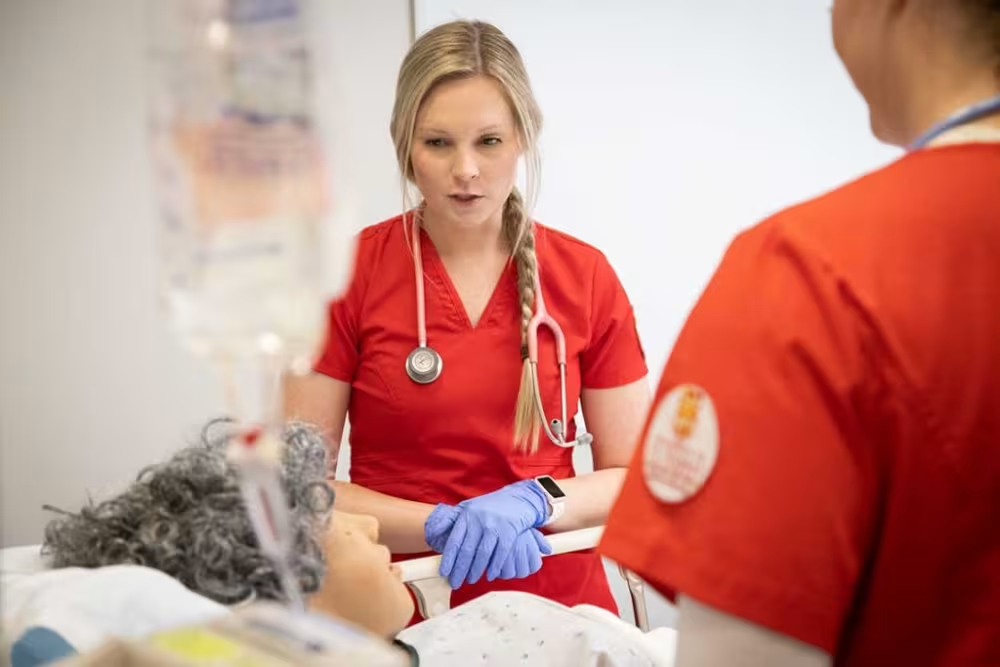
Skills labs teach foundational clinical skills, such as patient assessments, and simulation labs teach practical applications of the nursing process. You and your cohort members will practice navigating clinical scenarios using high-tech medical manikins as patients.
You’ll also complete clinical placements at nearby healthcare facilities. During clinicals, you’ll practice providing direct patient care under the supervision of your preceptor and clinical instructors. UST students complete multiple clinical placements across various practice areas, including pediatrics and obstetrics.
Pass the NCLEX-RN and Become Licensed
After graduating with a BSN, you’ll apply for authorization to test (ATT) through the state’s board of nursing (BON). With an ATT, you can schedule your NCLEX-RN test date. Passing this exam is necessary to obtain licensure as an RN. The curriculum at UST’s ABSN teaches everything you need to know to pass the NCLEX-RN, but it’s strongly recommended that you spend plenty of time independently preparing for the exam.

Take a closer look at the NCLEX-RN and get tips for passing it on your first try.
Gain Clinical Experience
Once you’re a licensed RN, you can begin applying to pediatric nursing jobs. Consider the clinical setting you’d like to work in and adjust your search accordingly. The Houston, Texas, area offers numerous choices for pediatric RNs. Consider looking for nursing jobs at Children’s Memorial Hermann Hospital or Texas Children’s Hospital, for example.
Pursue Professional Certifications
After gaining clinical experience, you could strengthen your resume with one or more professional certifications in your specialty area. Pediatric RNs have numerous options, including the Certified Pediatric Nurse (CPN) credential from the Pediatric Nursing Certification Board (PNCB) and the Pediatric Nursing Certification (PED-BC) from the American Nurses Credentialing Center (ANCC).
How Much Does a Pediatric Nurse Make?
According to the U.S. Bureau of Labor Statistics (BLS), all types of RNs made a median annual salary of $93,600 as of May 2024. The BLS does not track salary data specifically for pediatric nursing. Salary expectations are based on many factors, including years of experience, academic credentials, certifications, employer, and geographic region.
Why Consider a Career in Pediatric Nursing?
Pediatric nursing may be a good choice if you enjoy working with children and adolescents. You’ll be able to serve as an advocate for children and parents, ensuring your patients’ voices are heard.
Additionally, since pediatric RNs can work across many different care settings, you’ll enjoy diversity of choice. You could choose to work in acute care, critical care, family care, or outpatient specialty care.

Earn Your Nursing Degree Faster at UST
If pediatric nursing appeals to you, you can get started sooner at the University of St. Thomas in Houston, with three start dates per year and three locations in the Houston area. Our ABSN program enables you to graduate in as few as 12 months after completing any needed prerequisites.
Request information today to connect with an admissions advisor, who will walk you through the admissions process step by step.